

Move over, Oppenheimer—there’s a new mm masterpiece in town, and it’s literally about a star.
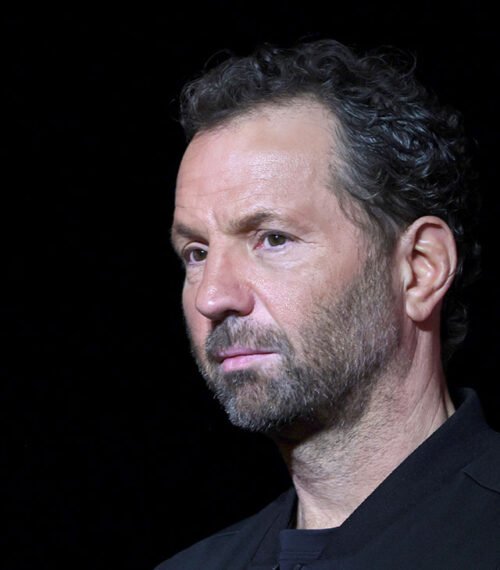
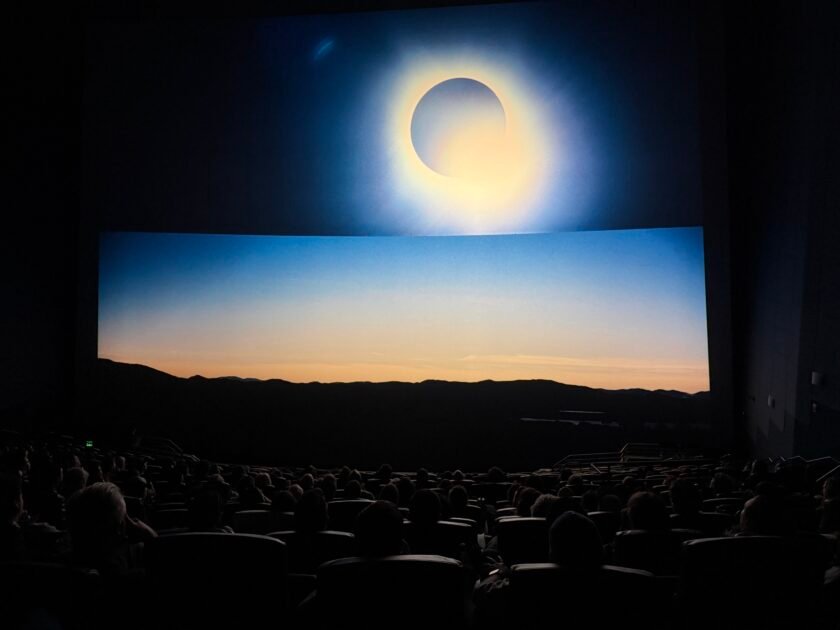
On a random Wednesday at the Universal CityWalk IMAX theater, the crowd wasn’t there for the latest blockbuster or a star-studded sequel. Instead, the nearly sold-out auditorium was buzzing for Eclipse, a short film by cinematographer Gus Bendinelli that is quickly becoming the talk of the internet and the film world alike.
The buzz? Bendinelli managed to do what most professionals thought was impossible: capturing the total solar eclipse in real-time on massive IMAX mm film without using a solar filter.
“I feel crazy saying that I directed this,” Bendinelli joked after the screening. “I got there and I rolled. I wasn’t like, ‘Alright, let’s do it again!’”
But getting that one shot was a high-stakes drama worthy of its own movie. Bendinelli spent two years preparing for those few minutes of totality, knowing that if he missed the window, he’d have to wait years for the next one over the U.S.
To get the “objective” look he wanted, Bendinelli refused to use a traditional solar filter, which often gives the sun an unnatural orange hue. The risk? Without a filter, the sun acts like a magnifying glass. If the film isn’t moving fast enough, the sun will literally melt the film stock—or worse, the filmmaker’s eye if they dare to look through the viewfinder.
Bendinelli tracked down two incredibly rare Mitchell-Fries AP cameras—the same tech used for epics like : A Space Odyssey. For the film itself, he used mm Kodak stock that was actually left over from the production of Christopher Nolan’s Oppenheimer.
During testing, the sun did start burning holes in the film, but Bendinelli realized that once the camera hit the requisite frames per second, the “magnifying glass” effect didn’t stay on one spot long enough to leave a mark. “Running these cameras is a bit like getting a car up to speed,” he explained.
Then came the “eclipse chaser’s” greatest nightmare: the weather.
With a storm system chasing him across the country, Bendinelli and his tech lead, Ian Mueller, drove hours a day for nearly a week. They started in the South, but as the clouds moved in, they kept pushing North until they hit the very edge of the map in Jackman, Maine—just miles from the Canadian border.
Surrounded by forested mountains and a quiet valley, they set up their massive, fifteen-pound magazines of film. After months of anticipation, Bendinelli had just seven minutes to capture the event.
The result is a breathtaking, -foot-tall meditation on light. The top half of the screen shows the sun disappearing behind the moon in crisp detail, while the bottom half shows the Maine landscape plunging into midday darkness.
The project has become a viral sensation among cinephiles and science geeks alike, even drawing an astrophysicist who flew in all the way from Hawaii just to see the footage.
And if you’re hoping to catch it on TikTok or YouTube, think again. Bendinelli has no plans to release the footage online. He wants people to experience it the way nature intended: together, in the dark, looking up.
“An eclipse might be the closest thing nature has to a movie,” Bendinelli said. “The lights go down, and we all look up.”