
















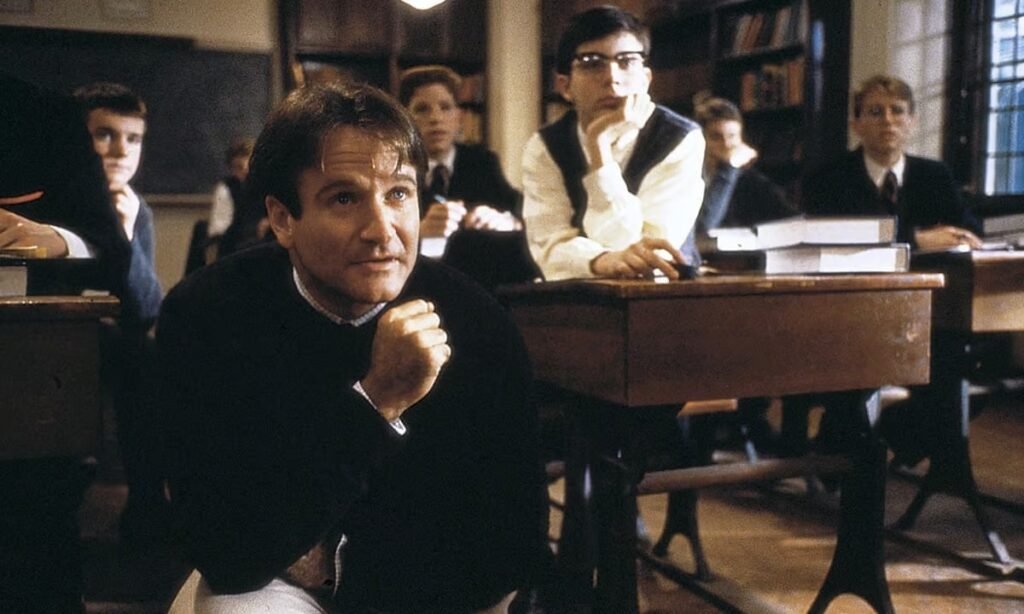

During the filming of Dead Poets Society, Ethan Hawke was an 18-year-old kid who was stumped by what he saw in Robin Williams. The comedian was not commanding his comedic chops to send the cast tittering with laughter. Instead, Williams broke his own and every other actor’s rule in Hollywood to imbue his role with pure magic.
Hawke, who was more than impressed by the feat, exclaimed in a Vanity Fair video interview:
Robin is a comic genius. But dramatic acting was still new to Robin at that time. Robin didn’t do the script, and I didn’t know you could do that. If he had an idea, he just did it. He didn’t ask permission. And that was a new door that was opened to my brain, that you could play like that.
In the end, no one was complaining about Williams’ method, as it was unilaterally accepted how his improvisational skills helped elevate the scenes and dialogues in the film rather than affect them.
Robin Williams’ Refusal to Bend to the Rules Made Dead Poets Society Even Better
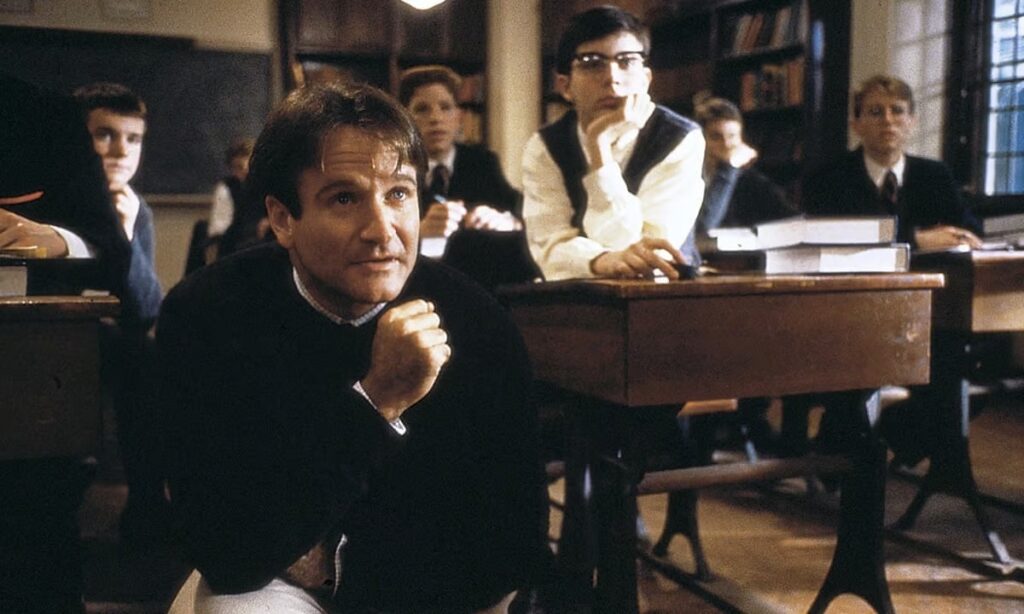
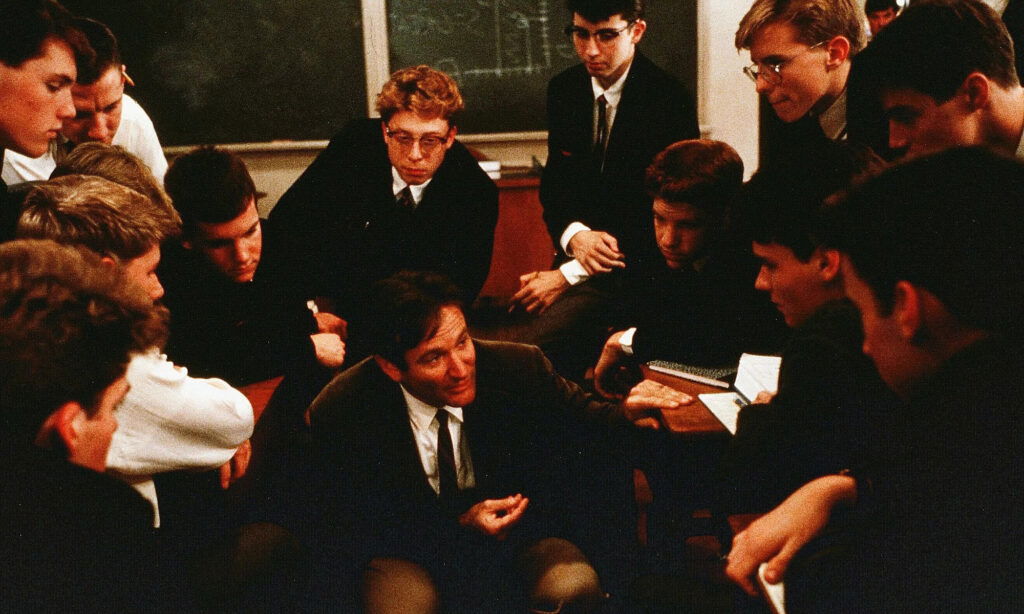
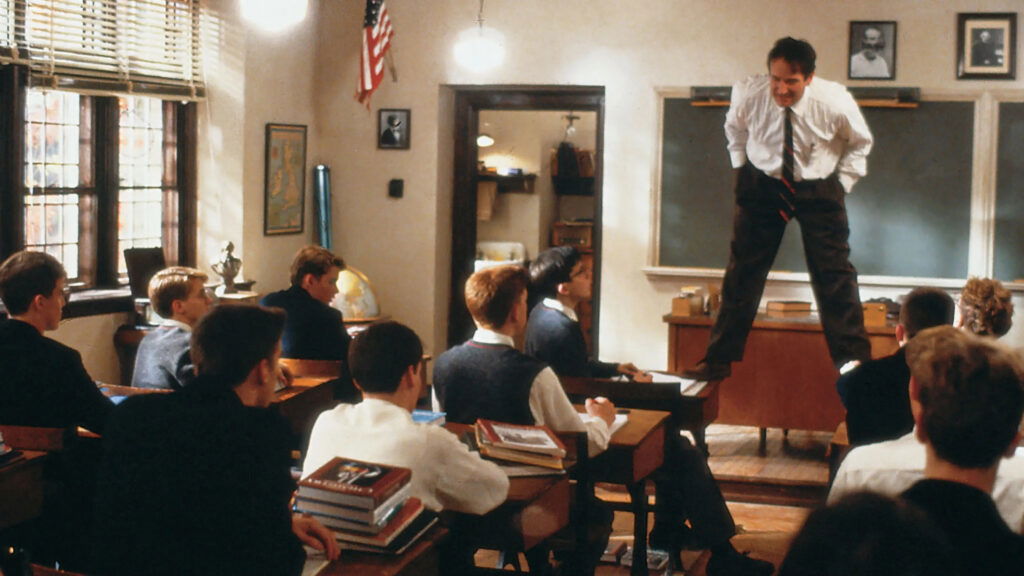
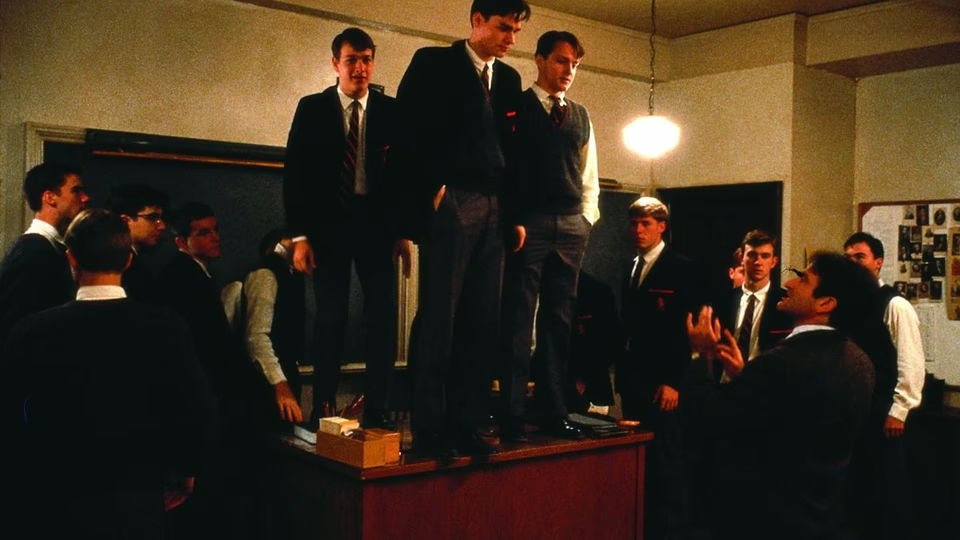
It takes a lot of honed skill to improvise a scene while filming it to make it not too obnoxious or lackluster. In case of Dead Poets Society, Robin Williams had to break off from his usual comedic self to improvise his dramatically enthused role, and keep the scene poignant instead of losing its gravitas.
Hawke further told Vanity Fair:
[The director] liked it, as long as we still achieved the same goals that the script had … They worked with each other. That’s exciting — that’s when you get at the stuff of what great collaboration can do. You don’t have to be the same — you don’t have to hate somebody for being different than you are. And then the collective imagination can become very, very powerful, because the movie becomes bigger that one person’s point of view.
The film still remains as one of the greatest examples of coming of age cinema, starring some of the generation’s best actors at the cusp of fame and adulthood. And both the story and the cast were single-handedly guided to an emotionally powerful union by Robin Williams.
Dead Poets Society Exposed a New Side to Comedic Genius Robin Williams
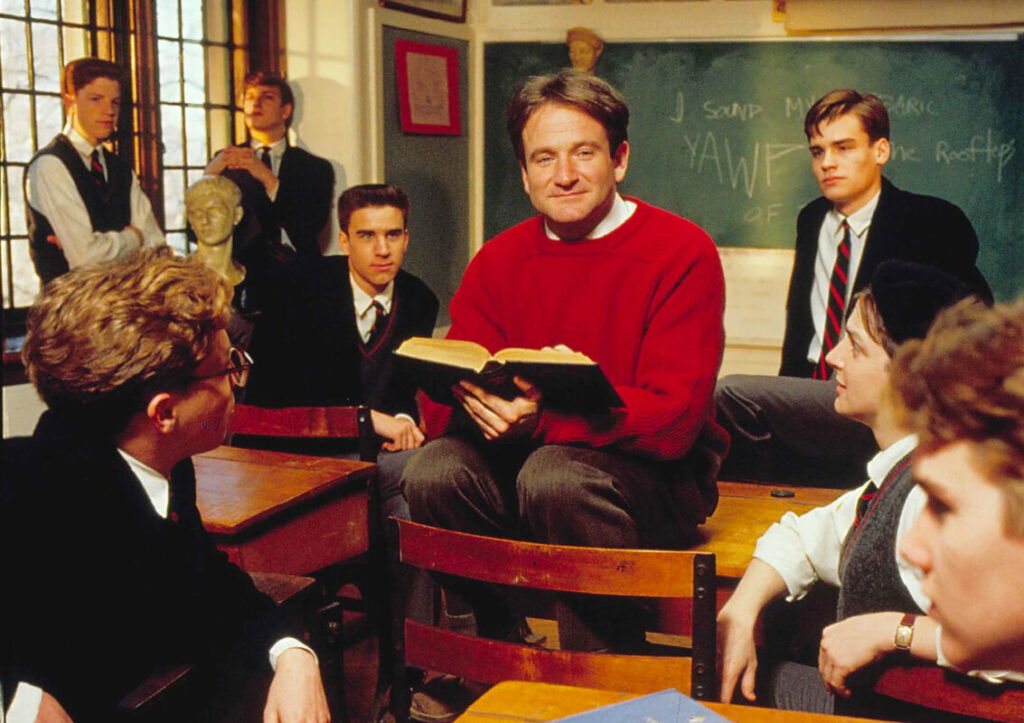
Once in a blue moon, a comedic genius breaks his industry-induced restraints and shocks the audience into looking at them through a different lens. Robin Williams was a mercurial star from the beginning, and even his comedies were a kaleidoscope of great acting, from heartwarming and emotional in Mrs. Doubtfire to heavy and dramatic in The World According to Garp.
But it was Dead Poets Society that forced the world to look beyond the obvious and see what the actor was truly capable of. For the most part, the movie is a poignant drama that aims to be one of the best films of its time. On the other hand, the story has some arbitrary and deeply flawed elements that simply cannot be explained away (Roger Ebert).
Those story conflicts are the ones that show Williams’ character, John Keating, at his most dramatic. As Roger Ebert succinctly puts it, “Keating is more of a plot device than a human being.” He is intelligent, mercurial, quick-witted, and erudite, but even his dramatic turn in the film could not hide a few cracks in his movie persona that belied a great comedian.
As great as he is at making the world laugh with his antics, Dead Poets Society served so much better with the actor lacing his comedic tone with a touch of the melodramatic. In fact, a combination of the two made his prep-school teacher a better character rather than whatever one-dimensional person the script had in mind.
Below is a list of every essential detail regarding the movie:
What did you think of Williams’ role in Dead Poets Society? Let us know in the comments below.
Dead Poets Society (1989) is currently streaming on Hulu.