

















Crafting the creatures of Frankenstein is no easy task. Director Guillermo del Toro remains one of the most demanding artisans of all time, and to create his worlds, he needs a strong crew to back up his vision. Effects designer Lee Romaire has a long history in film and television, having contributed to dozens of box-office successes. Even cooler, he’s helped Disney Imagineering in the creation of real-world, practical effects that are used to bring unique experiences to life. Romaire sat down with FandomWire to discuss his work on del Toro’s latest epic, as well as explain his role in helping shape the modern theme park landscape.
Lee Romaire Interview on Frankenstein and Theme Park Design
FandomWire: I really appreciate you talking to FandomWire today about your work on Frankenstein. One of the cool things that I noticed about your career is that you’ve worked with many legends, including Dick Smith and Jim Henson’s Creature Lab. What makes somebody want to jump into creating prosthetic and creature effects?
Lee Romaire: Well, I am from Louisiana, and I was always fascinated with things that looked real. It could be a rock, it could be a tree, but mainly, I was surrounded by taxidermy. People had animals on their walls, in houses, and in restaurants. It’s something that looked real.
Also, I took trips to Disneyland when I was a kid. Pirates of the Caribbean and all that. I graduated from college, and I was in advertising as a writer. But I got really tired of that after about a decade and decided one day I wanted to be a special effects makeup artist. I was really fascinated as a kid with monsters and things like that.

As soon as I made that decision, I saw a makeup artist magazine in a bookstore. I looked at it, and there was a trade show coming up in Los Angeles. I went to it and that’s where I met Dick Smith. That’s kind of where the whole thing started. From there, I worked hard to get a portfolio together and move to LA to work.
The timing was right, and I got to work at some great places. The first person I worked for was Steve Johnson. The first interview I had was with Rick Baker. So, it all worked out. Most people don’t get that I was lucky. But I was ready for it and prepared.
FW: What first got you in contact with Guillermo del Toro about Frankenstein?
Lee Romaire: My friend, Mike Hill, is an amazing creature designer. He designed the creature from The Shape of Water. He’s somebody who’s probably the best at likenesses of anybody in Hollywood. He and Guillermo have this great partnership. Mike was saddled with all this work for Frankenstein, so he contacted several studios.

Stranger Things Makeup Artist Reveals How They Got Robert Englund’s Insane ‘Victor Creel Eyes’ Right
He contacted me for the animals. I guess I’m the dead animal guy of Hollywood? I don’t know. He told me what he wanted, and we went back and forth. It was an interesting job because there was enough time, enough money, but we had to replicate sheep and dogs from that time frame. So we had to do a little bit of research on that.
FW: Well, I was going to actually ask about that. Most people do not realize how much these animals evolve over decades or centuries. It’s like how dog traits get bred in and out. Kind of, how do you begin the process of researching for an animal, even 200 years ago, it is going to be slightly different than what we’re used to.
Lee Romaire: Well, first of all, I asked the art department, because they usually have a pretty good idea of what they want. That was a big help. We had actual animals from a specific trainer who has dogs that looked very similar to how they were back in the day. We got a lot of reference photos from that.
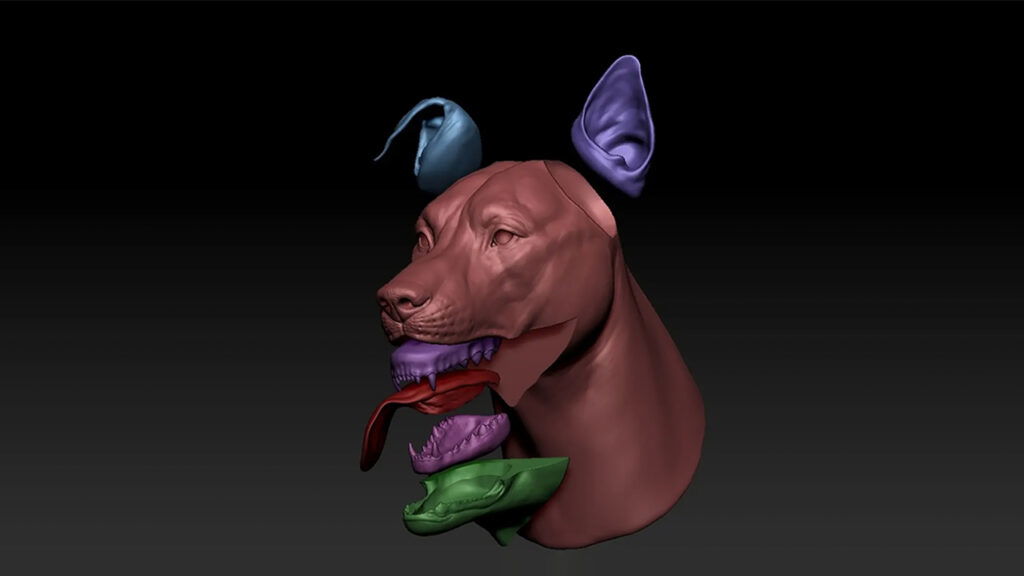
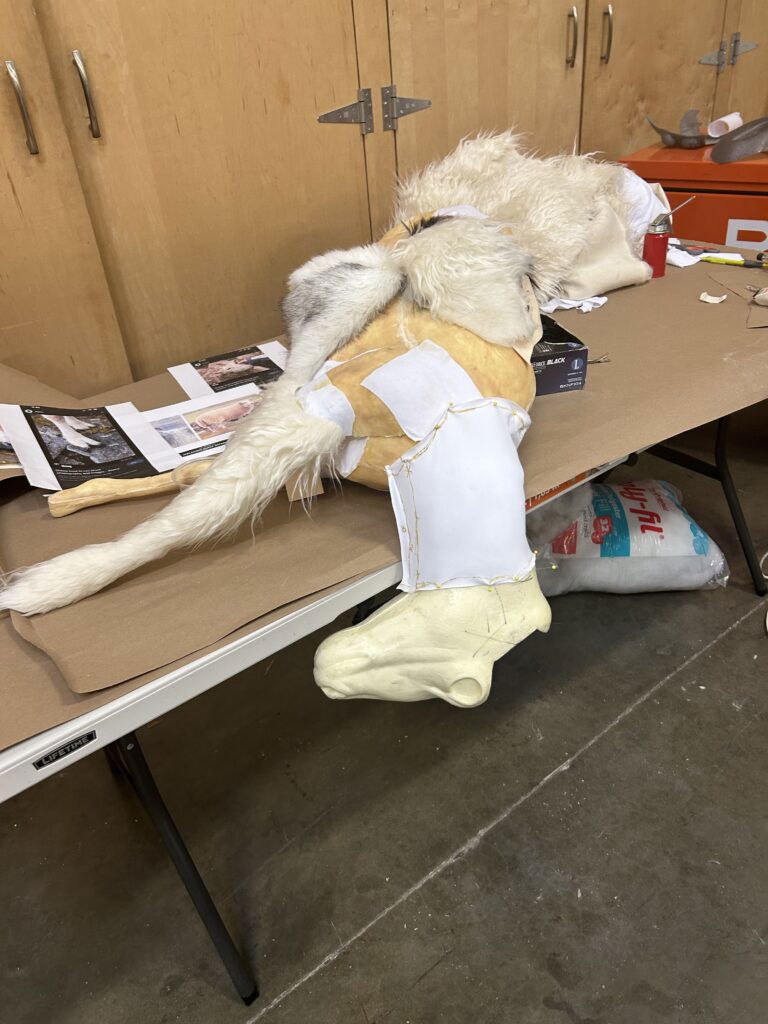
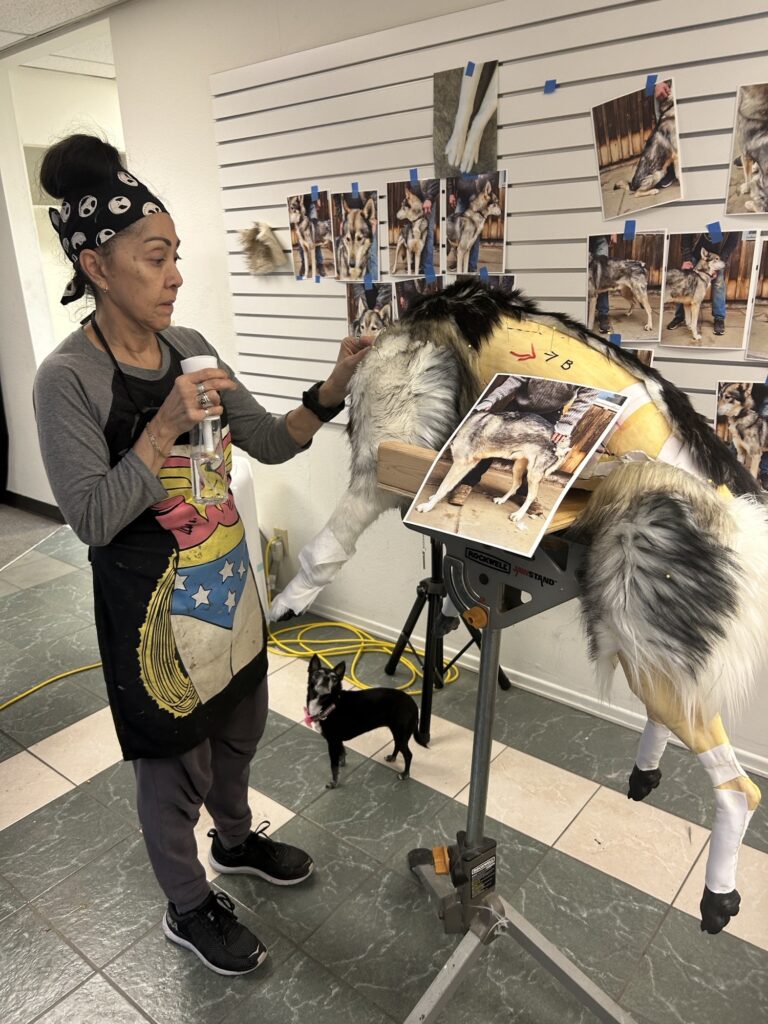
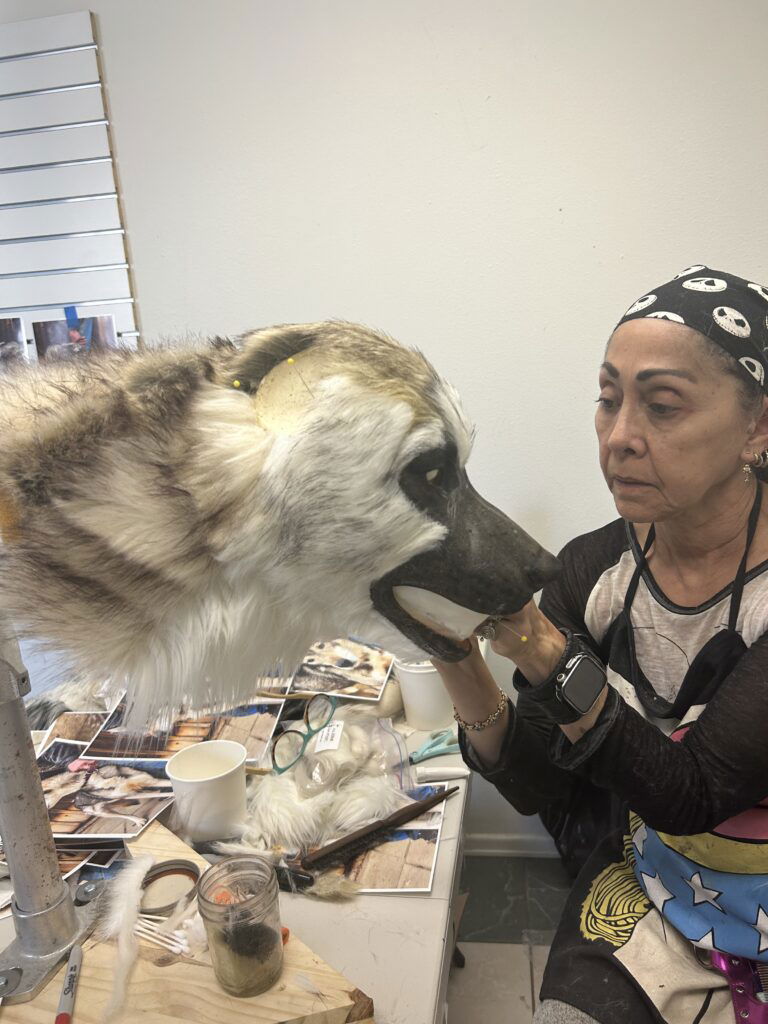


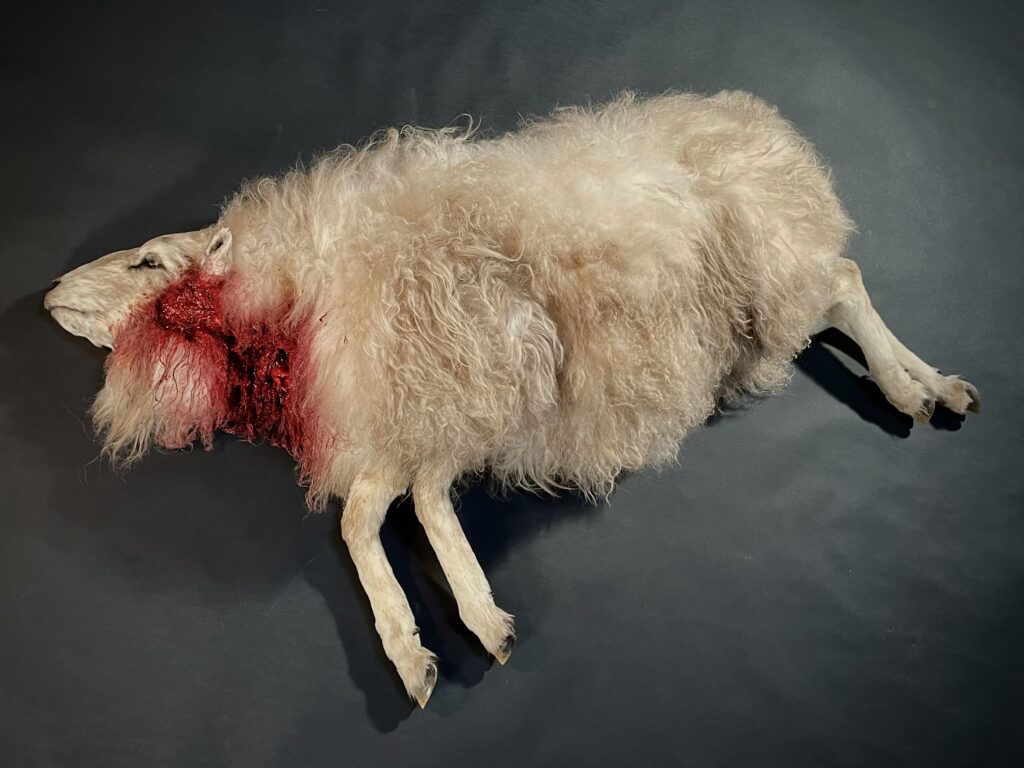
FW: In terms of creating an authenticity about those animals. How do you make them look so realistic? Some of them look upsetting in the movie because they’re so well-executed.
Lee Romaire: Thanks! I had that background, and one thing that gave me a leg up was my background in taxidermy. As a kid, I actually started learning taxidermy myself at eight. I had my own little shop, and I would mount what people would bring me. A fish or duck. I did that until I went to college, so I had a background in fur and feathers. Knowing what makes something look real kind of comes to me naturally.
FW: Obviously, Guillermo del Toro is a visionary filmmaker. He has a lot of opinions about the design. Was there a lot of consulting with Guillermo about the animals at various stages?
Lee Romaire: One thing I did was show them [Guillermo del Toro and Mike Hill] a lot along the way. A lot of times, you can’t show the client anything that’s not completed. They think, “Oh, that’s how it looks.” No, we still have five more steps to go before it’s done.
“I have a real love-hate thing going on with Disney”: Ryan Gosling Sells a Wild Story To Hide His Unhealthy Obsession With Disneyland
Those two guys, Guillermo and Mike, know the process. I could show them all along the way what we were doing. We had several different ideas about the mangled dogs. One had a smashed head. And yes, I actually got a sketch from Guillermo. He’s like, “This is what it should look like,” and we just copied it. That’s how that one happened.
I made several suggestions about other dogs. Like, there’s one dog that has its head completely twisted around. It had to be something kind of horrific, right? And the sheep were gutted and eaten up. It was, you know, those were pretty standard to do.
FW: You also have to integrate with CGI. Is your team involved in the process, showing how that design should work? Or do you guys work with the visual effects artists on that at any point in time?
Lee Romaire: Not on Frankenstein, but we have on other projects. You have to work really closely with those guys to match up. We just did a theme park thing. She’s a new character that appears digitally and in our animatronic figure. Yeah, we had to work really closely together and get the colors right, get the proportions right, and all those kinds of things. And it worked really well.
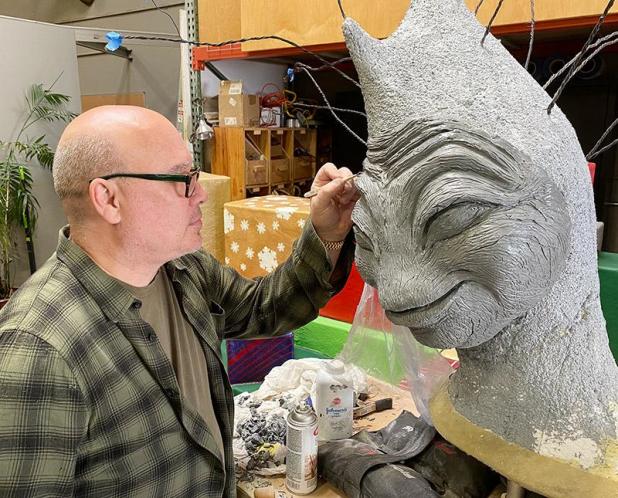
FW: I also want to touch on that and figure out where that line of authenticity lies when you’re working for a movie versus working in a theme park. In a movie, it obviously has to read on camera, where we see it, and it’s very bloody or unique. Versus in a theme park, we want to be immersed in the experience. Is there a difference in how you approach those two different projects?
Lee Romaire: Absolutely. I think the people who do a lot of stuff for movies are really amazing. They do great work, so there’s not much digital touch-up. Maybe there isn’t makeup, or things like that. But you don’t have that luxury at all in the theme park work. It has to look as good as it can, because it’s there.
When we do puppets or any animatronics for movies, you can stop the camera. You can fix it. You have a crew that’s working on it. That’s not so in a theme park. It has to run 16 hours a day, every day. We sign contracts that say this has to work for 20 years with a 95% reliability rate. That in itself requires engineering. We have a full engineering staff, as well as mechanical designers who know how to build for movies.
FW: You won some big awards over the years for The Secret Life of Pets. You won awards for working on that attraction, as well as the Galactic Starcruiser. Can you tell us about the process of how you started with Disney, and what it’s like to continue to work with these big theme parks?
Lee Romaire: When I started my company in 2001, I was working for other people and doing kind of side projects. I wanted to do movies, commercials, and TV shows. But someone approached me from Imagineering, a friend of mine who was working there. He wanted me to help do the aesthetics, sculpting, painting, and stuff for the first electric head that Disney was creating.
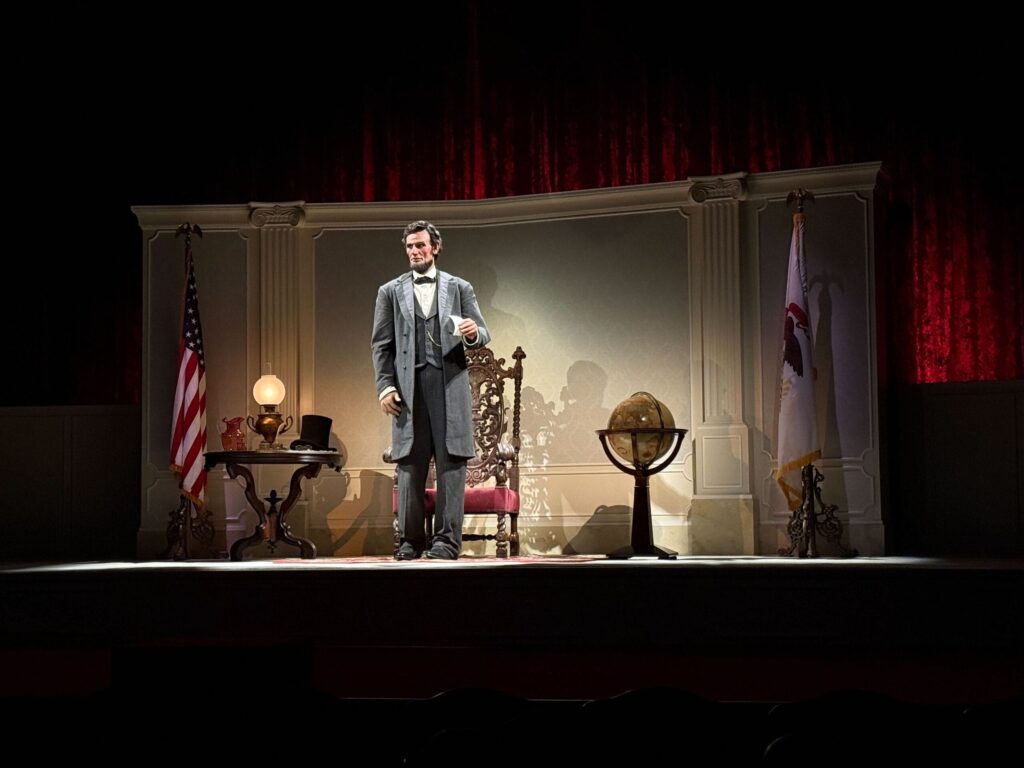
They had always done like pneumatics and hydraulics, but this was the first time that they were going electric all the way. Everybody has done that since, but this was the first one. There were several iterations, but then the project for Abraham Lincoln came up at Disneyland. That was the first audio animatronic human that Walt Disney ever did. It was like his favorite project, and they were redoing the show.
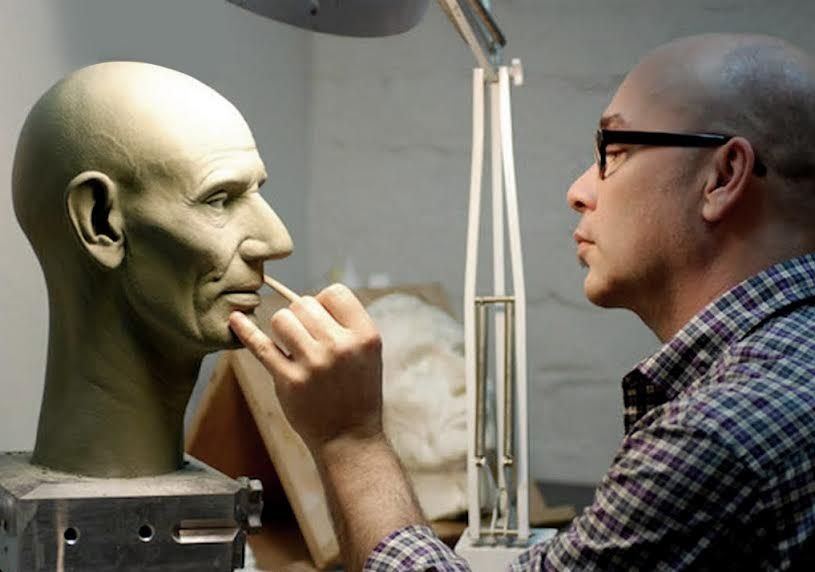
It required a new sculpt and everything in the famous Lincoln. The famous sculptor Blaine Gibson did all the beautiful sculptures. It was a little scary to join that and create that scope. But I sculpted the new Lincoln. I also talked Disney into letting me do the complete finish work on all of it. The hair, the paint, everything. We did a lot of innovative things for that. We actually punched the hair into the skin, and we actually punched the whole beard. We shaved it so you could see the beard and stubble. We created wigs that went exactly back into place.
Frankenstein Review — Guillermo del Toro’s Visceral Meditation on Rejection and the Creator’s Arrogance
I started getting a lot of work like that. And we actually did all the paint work on the Avatar figure in Animal Kingdom, lots of pirates, other presidents, the Country Bears. I got to redo that, which is really cool. We just helped refurb the Tiki Room.
I convinced them that we could do all of that because of the movie business. I had a lot of talent that I could bring in to help. Bring that quality that the movie special effects companies have into the theme park world. After that, I focused all my energy on the theme park world. I had to build that engineering team to really convince people that we could build a whole figure that would last for 20 years. That’s where we’re at, and we’re one of a handful of companies that can actually do this kind of work.
Check out more of Lee Romaire’s work and the work of his studio here! Frankenstein is now streaming on Netflix.