















High Potential season 2 just wrapped up its Game Maker plot, and to say the resolution was beyond disappointing is putting it mildly. The procedural (and all its variations) is a genre that has been around for a while. Everything from case-of-the-week medical shows to whodunit murder mysteries follows the same general beats of the genre. But it's a deceptively tricky genre to get right, and High Potential's Game Maker vs Morgan arc shows exactly why.
The problem is that an effective procedural story requires great twists and a few red herrings. However, get too twisty as a writer (or group of writers) and you run the risk of getting lost in the maze with no realistic way out. At least, as High Potential season 2 just illustrated, there may not be a realistic way out in the allotted time one has.
When that happens, writers often choose to create a shortcut. Instead of finding their way out of the narrative maze the same way they got in, by following the twists and turns of logic to arrive at the other side, they instead take a machete to the plot and hack straight through the middle. That's what seems to have happened with this week's High Potential season 2 episode.
The Game Maker Leading Morgan To Maya When He Did Made No Sense

image of High Potential Season 1 David smiling
The big, infuriating reality of the Game Maker story's ending is that it was only possible because he, who we now know is really named Matthew Clark, made uncharacteristically dumb mistakes. The mastermind was caught not because Morgan beat him with her brilliance, but because he beat himself when his own brilliance failed at conveniently crucial times. It's the fictional equivalent of a team winning not because they played well, but because the other side played poorly.
He knew telling her would lead her past the room in which Maya was being held captive, just as he knew Morgan would realize it and find Maya. It would have made sense had he led Morgan to where Maya was being held after he got proof that Derek had killed Howard, but he gave her enough time to save Maya and thus thwart Derek. Why give up on his plan just a few minutes before he achieved his goal? It makes no sense.
The Game Maker's Uncharacteristic Mistakes At The Hospital Are Simply Impossible To Buy In High Potential
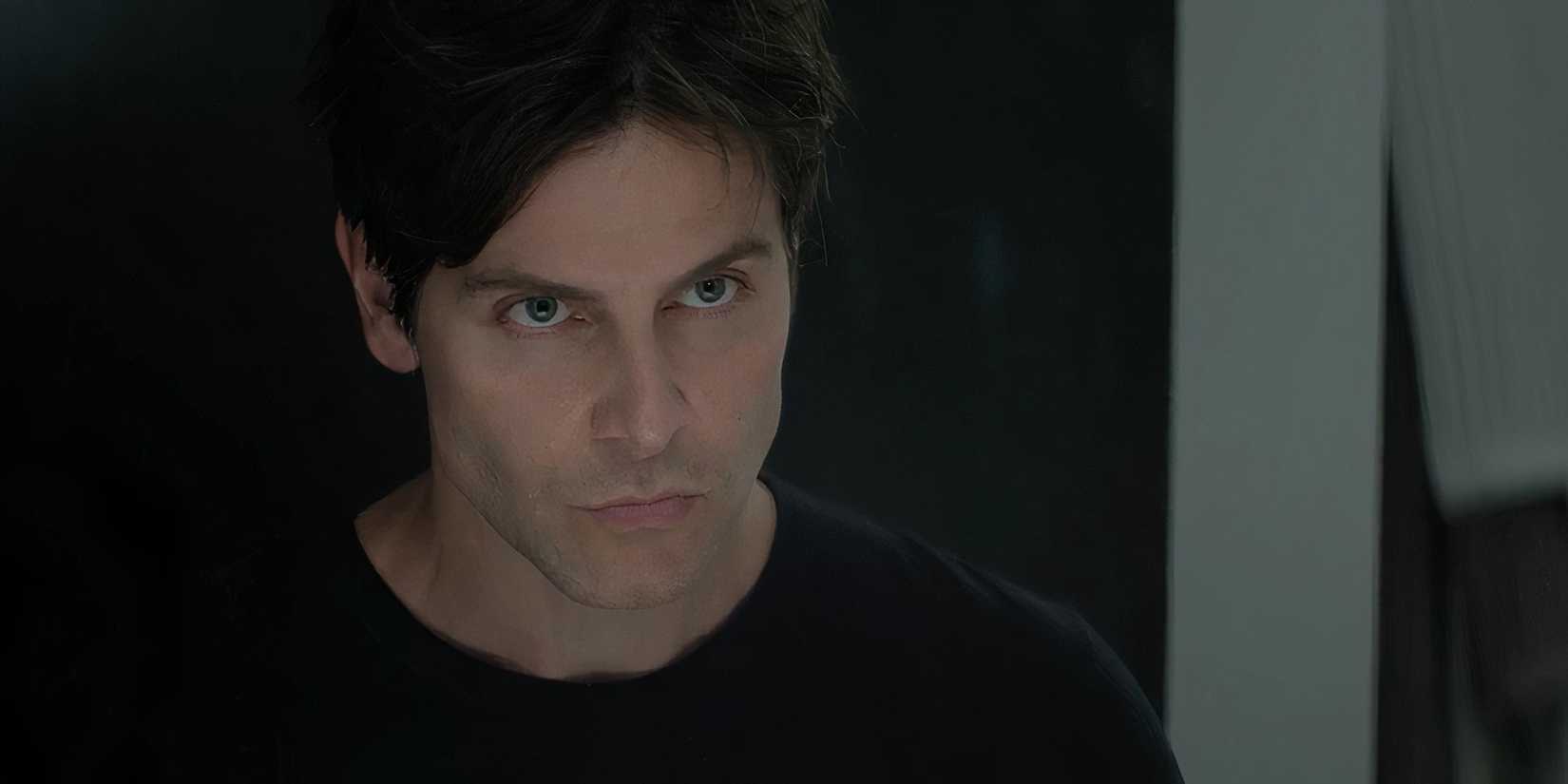
David Giuntoli as a mystery villain in High Potential
Ultimately, Morgan still wasn't able to prove that Clark was the one who had set Derek up and kidnapped four people, but she did manage to pin another, lesser crime on him to put him in cuffs: stealing Maya's blood from the hospital. That's not unheard of in policework. It's a common tactic used by real-life law enforcement; the most famous example being how infamous gangster Al Capone was finally arrested on charges of tax evasion after all attempts to pin more serious crimes on him failed.
The way Clark was caught, however, was thanks to mistakes he made that were so dumb that it was honestly insulting to both him and the audience to sell them as plausible. For starters, there is no way that the criminal genius, who to that point had been ten steps ahead of Morgan, would not have known that there were security cameras in the hospital where he regularly volunteered. He just wouldn't.
The second impossible mistake ties back to the contradiction of his leading Morgan to Maya before his plan had been completed. There is no way that a normal person, let alone one of Morgan's brilliance, would not have noticed that Maya was completely unharmed when finding her.
The amount of Maya's blood on the jacket in the truck, along with the stab wounds, indicated someone who was badly injured, maybe dead. Maya's lack of injuries would have immediately been flagged as a contradiction that required further investigation. Clark left a trail that any half-decent cop could have easily traced to the hospital where he volunteered, a trail that led straight to those security cameras that Clark, again, somehow just didn't think about.
In the end, his capture was utterly anticlimactic for both the show and the audience. When a character acts in an uncharacteristic way that's earned thanks to the story having properly set up that change, it's called character development. When a character acts in an uncharacteristic way that makes no sense, that's called a plot hole. Character fidelity matters, and, unfortunately, High Potential threw it out the window this week.
High Potential Season 2 Relied On One Of The Procedural Genre's Worst Habits To Catch The Game Maker

Unfortunately, the sloppy narrative shortcuts that High Potential season 2 took to wrap up the Game Maker plot go hand-in-hand with another bad narrative habit. Clark was positioned as the Moriarty to Morgan's Sherlock, the Master to Morgan's Doctor. While I personally think the Sherlock-Moriarty good vs. evil supergenius dynamic is rarely executed well on TV, the Game Maker plot introduced a new dynamic we hadn't yet seen.
In the High Potential season 2 premiere, Morgan was on the verge of unraveling, setting up a potentially fascinating arc where Morgan learns how to adapt to not being the smartest person in the room. She even mentioned that she was having a hard time wrapping her mind around how someone with her own level of genius would use it to harm others.
The High Potential season 1 finale set the expectation that the Game Maker would be involved as a major plot driver, if not the overarching villain of the season. Instead of fulfilling that promise, however, High Potential season 2 quickly wrapped it up, reducing the Game Maker to a throwaway arc with the obvious intention of clearing a path for the Roman mystery to take center stage.
Unless High Potential season 2 uses the Game Maker as a springboard to catalyze Morgan's character evolution or an influencing force behind her actions moving forward, it's hard to see what the point of it was beyond the writers simply needing a season 1 cliffhanger. Either way, Morgan, the Game Maker, and audiences deserved better. Let's hope the show handles the Roman mystery with more care.