

















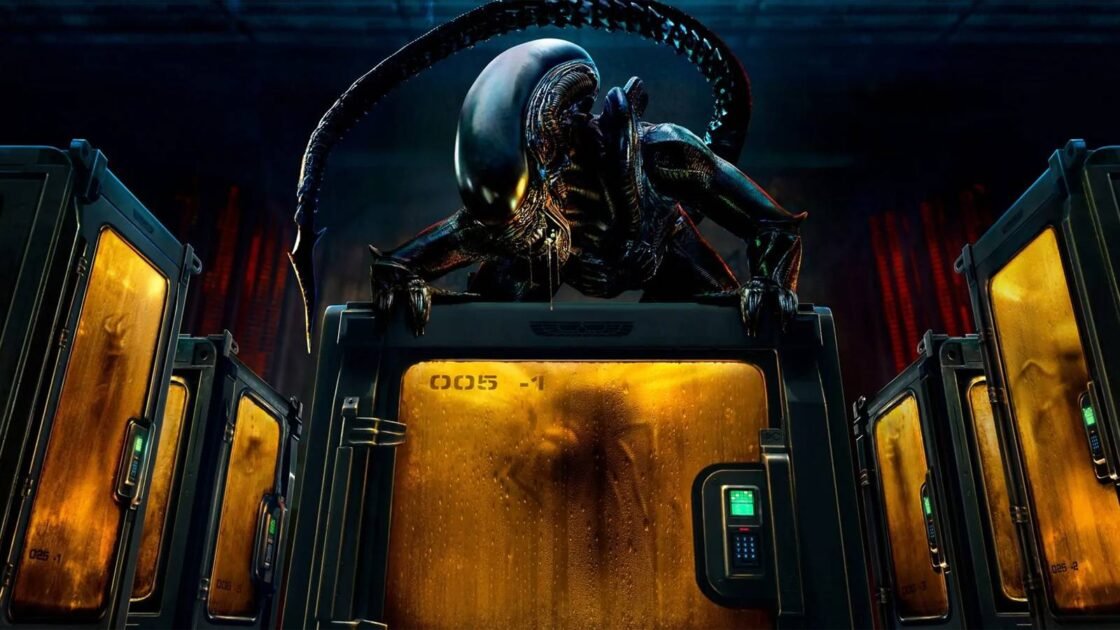

Warning! This article contains SPOILERS for Alien: Earth season 1.Alien: Earth centers around five alien lifeforms that crash-landed on Earth, and we have a wealth of information about the new creepy crawlies. Alien: Earth begins with the USCSS Maginot, a Weyland-Yutani research vessel that crash-lands on Earth while carrying five alien specimens. One of these is the well-known Xenomorph, but the other four are entirely new to the Alien timeline.
We know some general information about all the species in Alien: Earth thanks to the Maginot's mission. The Maginot was sent on its research mission 65 years prior to Earth, which takes place in 2120. That means they're from distant reaches of the galaxy, and that they've been in containment for years leading up to the series and their escape from the ship.
After the ending of Alien: Earth season 1, we've now seen every alien species in the show in action. From acid to neurotoxins and outright zombification, the aliens of Alien: Earth present a wide array of huge threats to humanity and its creations. Knowing more about them is key to understanding Alien: Earth and just how much trouble Prodigy brought down upon itself.
Xenomorph
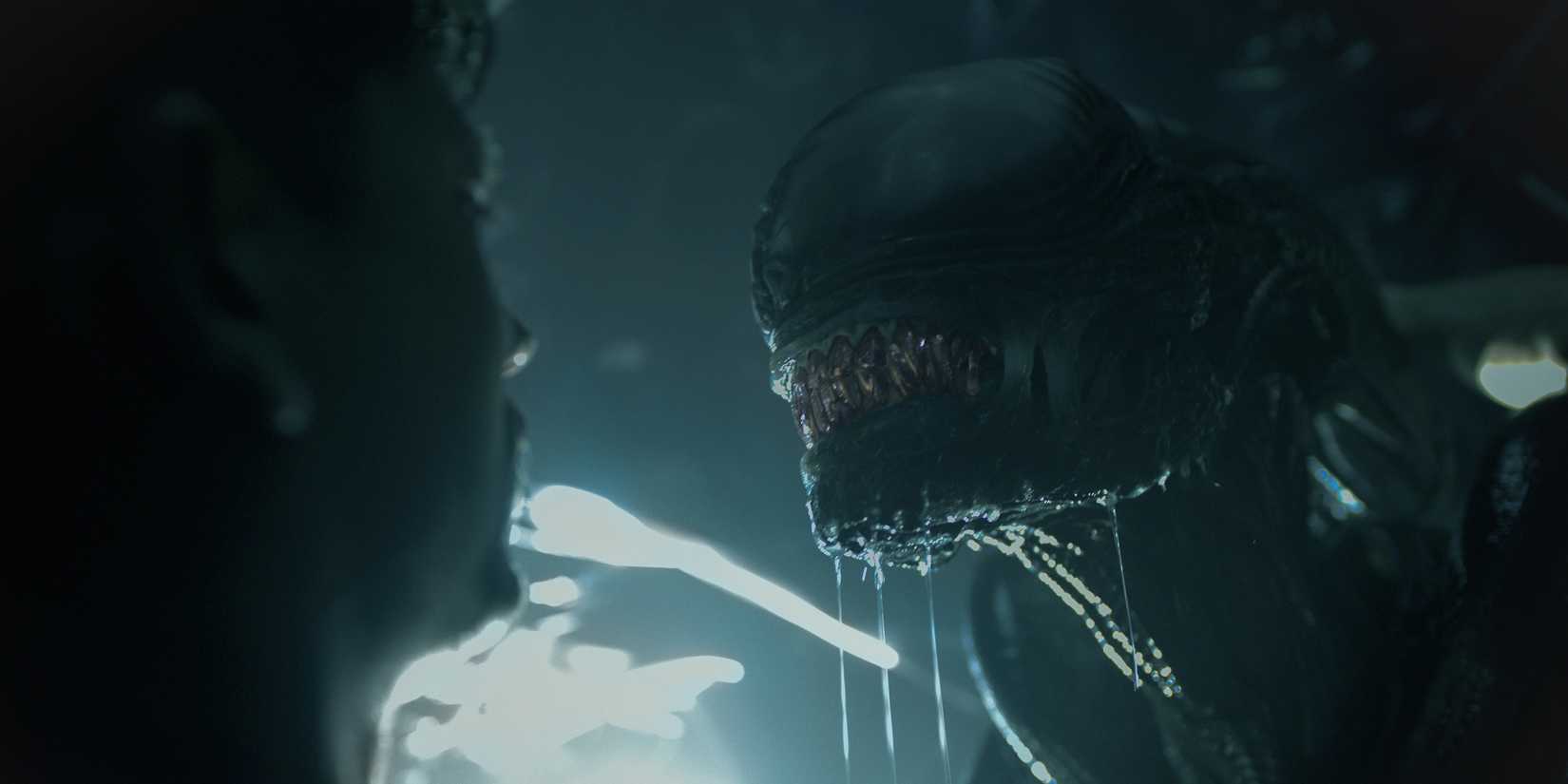
A Xenomorph from Alien Earth
First and foremost, Alien: Earth is most interested in the iconic Xenomorphs. Xenomorphs have been the main antagonists of the Alien franchise since 1979 and the original Alien movie. As such, we have a wealth of information about them thanks to the seven canon Alien movies, a plethora of books, comics, and video games, and much more.
Regardless of origin, the Xenomorph life cycle is extremely well-documented, if not entirely clear. Xenomorphs begin life as an ovomorph, an egg. A facehugger is then born, which attaches itself to a living host (usually humans) and embeds a proto-creature into their chest cavity. When the larva develops enough, it erupts from the host as a chestburster, eventually growing into a Xenomorph drone.
Later Alien movies established more variant types of Xenomorphs. Aliens features several warriors and a queen, which lays the ovomorphs that spawn new Xenomorphs, for example. The type of creature a facehugger impregnates also impacts what kind of Xenomorph will be born, as evidenced by the runner in Alien 3.
We also have a wealth of information about Xenomorph biology. Xenomorphs have acidic blood that is capable of melting through metal. They also have a secondary jaw that they can propel from their main mouths with enough force to punch through metal. More broadly, they have black skin, oblong, eyeless heads, and spiked tails used for hunting.
Alien: Earth also introduced some new information about Xenomorphs. Morrow alleged that Xenomorphs "see" by detecting fear, presumably through pheromones. Alien: Earth episode 3 also demonstrated that facehuggers lay a tadpole-like larva into hosts. Later episodes established that Xenomorphs have their own language that Wendy could decipher, though Alien: Earth's canon status may make this a moot point.
We later learned that Xenomorphs can actually be controlled by humanoids. By learning to speak the Xenomorph language — which consists of a series of guttural clicks — Wendy was able to use a Xenomorph as a sort of personal attack dog. She could issue simple commands like "follow" and "attack," and she even seemed to form a personal connection to her Xenomorph.
Behaviorally, Xenomorphs are apex predators. They stalk their prey using stealth and powerful grips that let them climb up walls and along ceilings. They also seem to understand – to some degree – the power of fear, as Xenomorphs often toy with their prey before consuming or cocooning them to be incubated. As such, Xenomorphs will often drool on or screech at their prey.
After Alien: Earth season 1, the two Xenomorphs on Neverland Island were still working with Wendy and the rest of the Lost Boy hybrids. However, Weyland-Yutani's forces are en route to the island, and there will likely be another altercation before they're truly free. As such, the future of the Xenomorphs on Earth is still very uncertain.
Species 19
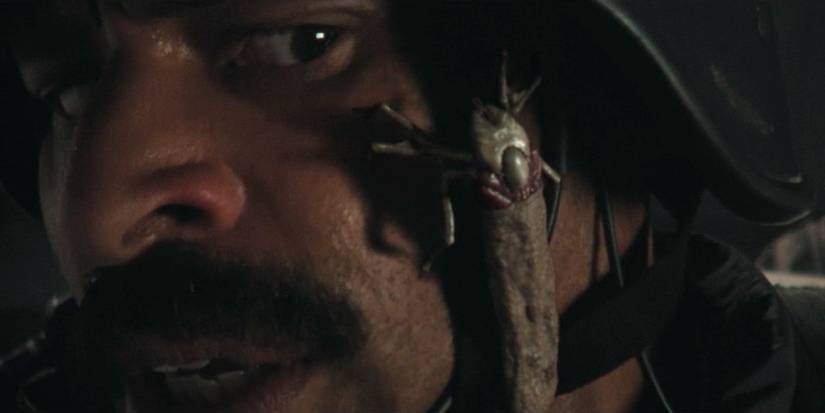
A tick-like alien lifeform crawling on a Prodigy soldier's face in Alien: Earth season 1, episode 1
The first novel species Alien: Earth properly introduced was a tick-like organism known to the crew of the USCSS Maginot as Species 19. As seen in Earth's premiere, Species 19 fed off the blood of live animals like humans, often siphoning off enough blood to leave a withered, dry corpse behind. Under starvation conditions, Species 19 would also feed on dead animals.
Alien: Earth episode 5 established quite a bit of information about Species 19. As shown in the episode, Species 19 was intelligent enough to distract the Maginot's science officer, Chibuzo, while another specimen unlatched their container and escaped. It then proved that it's capable of excreting tadpole-like offspring from its thorax, and that those offspring can survive in water.
If the offspring of Species 19 enters a living host, it latches onto a vein or artery within them. After feeding enough, the aliens will then emerge from the body and search for a new food source. Chibuzo and Rahim's attempts to remove the tadpoles then showed that Species 19 could produce a cloud of poison gas in emergencies that would cause humans to bleed from their eyes and suffocate.
Alien: Earth also included some miscellaneous details about Species 19. The alien is capable of spinning a spider-like web, though the purpose of these webs is unclear. They also have some level of awareness and even possibly the ability to be actively deceptive, as they were able to trick Chibuzo and draw attention away from the larvae in her water bottle.
Species 19 was not one of the lifeforms that broke containment during the Lost Boys' coup at the end of Alien: Earth season 1. They are presumably still being held in Kirsh's lab on Neverland Island. If Weyland-Yutani manages to reach the lab before Wendy and the Xenomorphs kill their forces, Species 19 shouldn't be hard to capture and remove from the island.
T. Ocellus/Species 64

The Eye alien in a glass jar in Alien Earth episode 3

A cat infected with T. Ocellus in its bloody eye socket in Alien: Earth season 1, episode 2
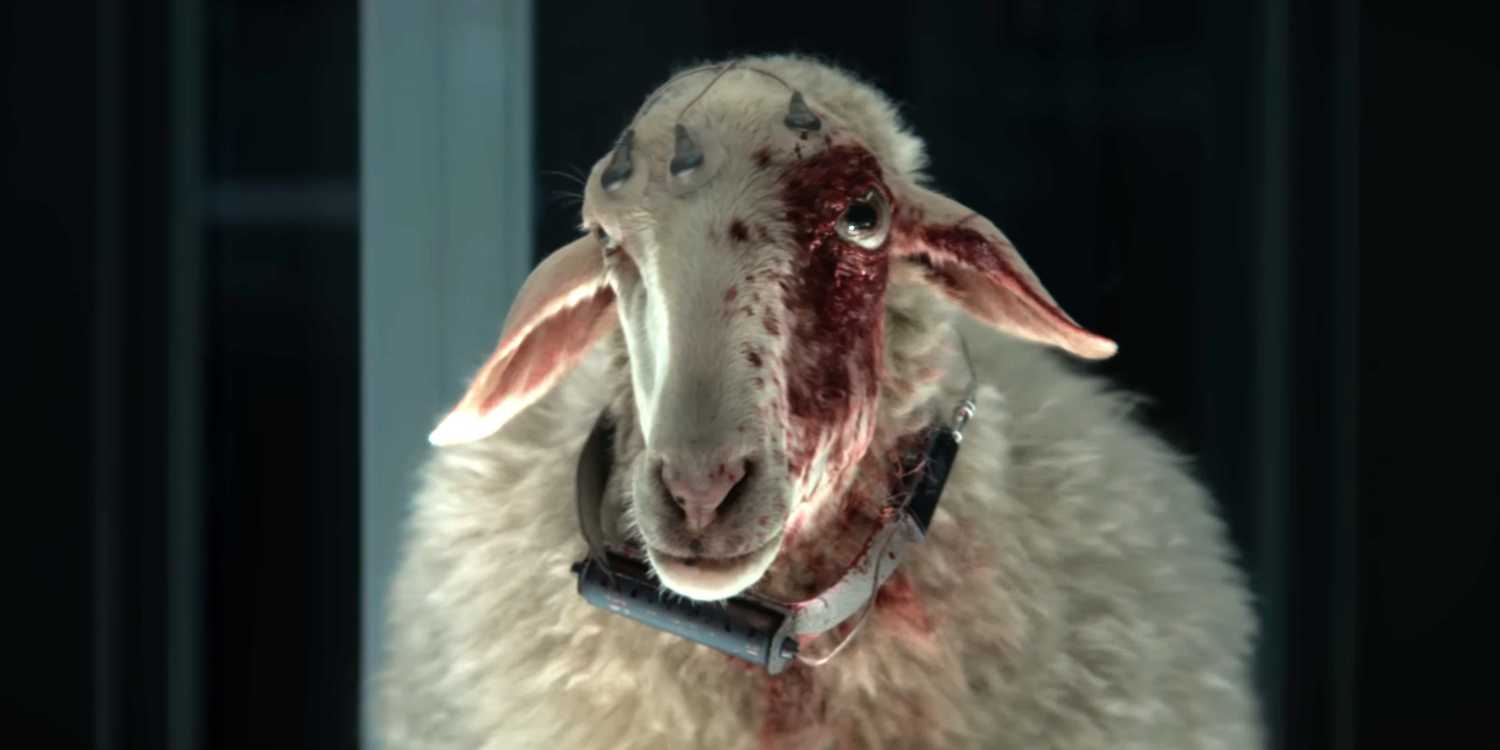
A sheep with a bloody, bulging eye and experimental equipment on its head and neck in Alien: Earth
The most interesting feature of T. Ocellus is its behavior: T. Ocellus gouges out the eye of a prospective host and burrows into its eye socket before using its tentacles to take over the host's optic nerve and brain. Once it does that. T. Ocellus takes control of the host's brain and motor functions, effectively turning it into a zombie. So far, we've seen this process done to cats, sheep, and humans.
According to Kirsh, T. Ocellus displays a remarkable, almost human-like level of intelligence. It's capable of problem-solving and concentration both with and without a host's brain to utilize. As seen in episode 5, T. Ocellus could manipulate its environment and was even able to destroy its container and escape without help from the Maginot's saboteur.
Though its communication skills weren't fully displayed in Alien: Earth, there's plenty of evidence that T. Ocellus comes from a somewhat advanced society of sorts. It was able to recognize and recite multiple digits of pi after Boy Kavalier tested it. A single individual likely wouldn't know a mathematical figure like pi without some sort of schooling, which indicates that T. Ocellus is a member of some sort of society.
At the end of Alien: Earth season 1, we last saw T. Ocellus fail to infect Hermit and leave for another part of Neverland Island. Eventually, it encountered Arthur Sylvia's corpse and infected his eye, proving that T. Ocellus doesn't actually have to have a living host to infect. It's unclear how long it can survive with a dead host, however, meaning it will likely have to attack some of Weyland-Yutani's incoming forces.
D. Plumbicare
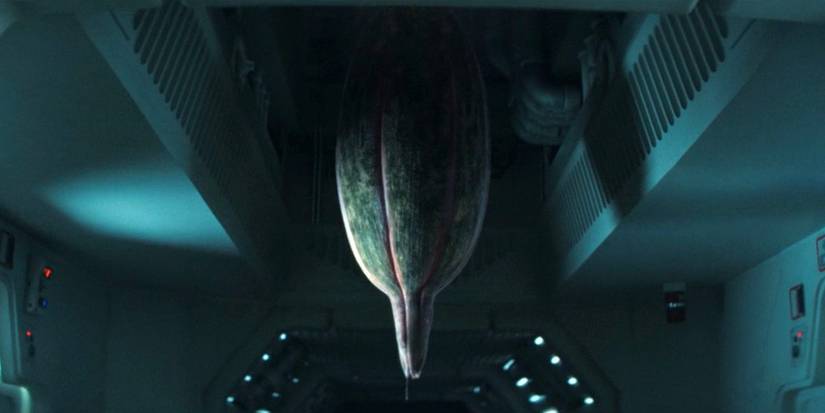
D. Plumbicare, a plantlike alien species in Alien: Earth season 1, episode 2
Alien: Earth hasn't revealed much hard information about the Maginot's fourth specimen, named D. Plumbicare, but there are some pieces that can be stitched together. D. Plumbicare is a plantlike alien species that resembles a large pod. It was first seen hanging from the ceiling, and it produced a long stamen it could seemingly use to manipulate its environment.
The Maginot's files briefly revealed some information about D. Plumbicare. Thanks to those files, we know that D. Plumbicare is carnivorous and lures prey into the range of its stamen before pulling them into the main pod structure of its body. Then, like a venus flytrap, it kills its prey via asphyxiation, dissolution, or exhaustion before eating the corpse.
|
Alien: Earth Release Schedule |
|
|---|---|
|
Episode Title |
Release Date (Tuesdays @ 8 p.m. ET) |
|
Neverland |
August 12 |
|
Mr. October |
August 12 |
|
Metamorphosis |
August 19 |
|
Observation |
August 26 |
|
In Space, No One… |
September 2 |
|
The Fly |
September 9 |
|
Emergence |
September 16 |
|
The Real Monsters |
September 23 |
The finale of Alien: Earth season 1 also finally showed D. Plumbicare in action. Those scenes proved that D. Plumbicare is capable of independent motion, secreting either saliva or mucus, and extending its entire body downward to capture prey. It also has enough strength to lift a grown human woman off the ground and presumably crush her body, resulting in spurts of blood.
As Slightly reported at the end of Alien: Earth season 1, D. Plumbicare managed to escape Prodigy's facility and is on the loose on Neverland Island. Given the island's natural jungle, D. Plumbicare should be exceptionally difficult for Weyland-Yutani's forces to locate and capture. That being said, it's unclear if the lifeform will ever be able to escape the island on its own.
Unnamed Fly Lifeform

Boy Kavalier (Samuel Blenkin) investigating a beetle-like alien lifeform in Alien: Earth season 1, episode 3
The last and least documented alien lifeform in Alien: Earth is a yet-unnamed fly-like lifeform. While the flies don't have an official name or species number, we know a fair bit about them, their background, and their biology. That's mostly due to the late Isaac (formerly Tootles) and T. Ocellus, which sabotaged him.
The flies created and lived in some sort of nest that was seemingly made of a wet organic material. Visually, it looked similar to a wasp's nest and seemingly had the same internal channels the flies could use as shelter. The flies themselves had a fairly typical insect-like body that was capable of flight, but also had a large, bulbous pouch below their mouths and a large tongue-like appendage that could extend from it.
The most notable aspect of the flies is their behavior and feeding patterns. Kirsh hypothesized that the flies come from a relatively lifeless planet, as they seem to ingest non-organic material and minerals rather than meat or plants. To aid that diet, the flies were capable of spitting out a type of acid that could corrode the synthetic parts of Isaac's face.
Most notably, the flies also digest their food outside their bodies. After killing Isaac, one fly spit another, darker fluid onto him that began breaking down more of his body. The fly then slurped up the digested materials and ate them.
As of the end of Alien: Earth season 1, the flies are still in containment at Kirsh's lab at the Prodigy facility on Neverland Island. Like Species 19, they will likely be captured by Weyland-Yutani's forces, assuming they can reach the lab. However, it's not yet clear if the flies' acid works on organic materials like human bodies, meaning they may be the most susceptible to capture.