

The work of a sound designer can be challenging, especially when your film is channeling so many different elements. Michael Babcock knows that firsthand, with KPop Demon Hunters and Nuremberg representing very different approaches. Babcock sat down with FandomWire to discuss both movies and his upcoming projects (including The Hunger Games and an Emily Henry adaptation).
Michael Babcock Interview on KPop Demon Hunters and Nuremberg
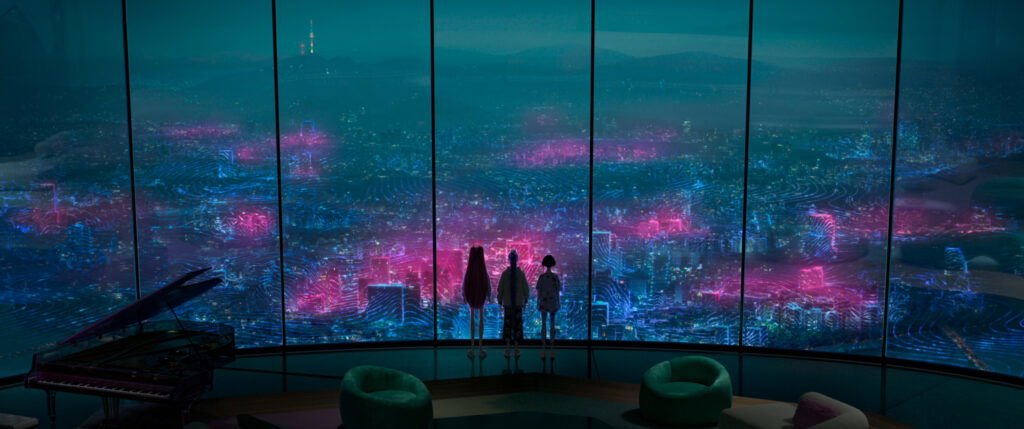
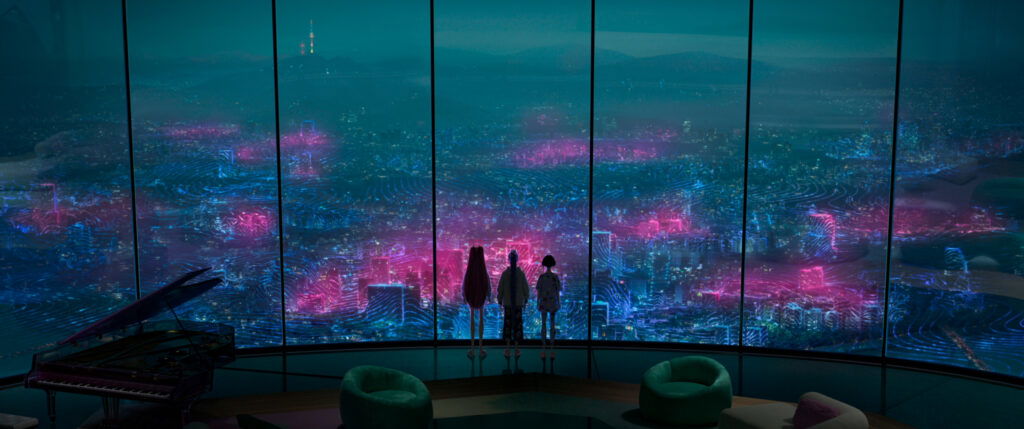
FANDOMWIRE: On KPop Demon Hunters, you not only blend the huge ballads and all of the fun pop music, but also have an entirely other sound library. Tell us about how you go about creating a sound library that actually integrates with the music?
Michael Babcock: Yeah, that was really fun. I always need a jumping-off point when I’m starting to build a vocabulary. The thought was, okay, what are the production things that go into a K-pop song, and how can that lens be used for literally every? That was my jumping-off point and gave me an excuse to learn a lot about music mixing. I’ve done music mixing, but just made sure I was staying up to date with all the tools most music engineers and producers like to use.
Every single sound effect in the movie has to go through a rhythm check and a tone check. Every tone you hear is pitched to the music, both the songs and the score. It’s not very common that you’re actually allowed to add sound design to the songs, because the songs have to win. But everything had a pitch or rhythm check, even if there wasn’t music. There’s a rhythm to that.
FANDOMWIRE: Was there ever a point in time when you were actually working with the songwriters to make sure that your sounds would match and play with the music?
Michael Babcock: Not the songwriters, but certainly the main producer, Ian Eisendrath. He was really the final signer off of everything, as far as the songs went. I also got to work with Curtis [Douglas], who mixed all the songs for the movie and the album. He started splitting things out so we could put it in ATMOS and be theatrical with it. I actually had to rebuild the mastering chain that he uses for the stereo recordings into Atmos. We used that mixing live, which is, I don’t think has happened too often. And possibly with good reason, I learned after figuring it out.
But what was really cool about working with the actual song mixer is that he mixes within Pro Tools, like I do. I could turn around and say, “I really like this delay effect that you’re using,” or “I really like this chorus effect, what are you using?” And I would take it and use that again in the movie, but build it for more of an Atmos space and use some of those treatments on the dialog treatments. Like all the demon voices that Rumi has? Some of those treatments are some of the same things that we’re using on the songs. That kind of crossover is not very common.
FANDOMWIRE: Your demons seem to have their own sound profile that’s different, not only from other demons but also from all the humans.
Michael Babcock: This movie had a very particular vocabulary. The demon treatment had to be different for everybody, but it also had to be the same by ear. Even Guima, the big fire guy, there are words and sometimes half words that were used this treatment on. It has to be a bit of a storytelling thing.
In Your Dreams Director Alex Woo on How Ratatouille Inspired His Dream Logic (INTERVIEW)
It was a lot of experimentation and discussion with the two directors. What’s the best way to make a character sound not harmonious, and also have it play nicely with the music? It was a different way of making creature sounds, and some of it actually had to do with the actors. Some of those layers are actually used in some of the different K-pop songs. Particularly when Rumi makes her shock wave from her demon voice, I would say, like, two of the five things are actually ripped right from a couple of the songs.
FANDOMWIRE: The other thing I love so much about KPop Demon Hunters is that guys are able to still infuse it with anime and cartoonish comedy that people are used to, like in Sailor Moon. Your sound design helps generate laughs. How does that process work?
Michael Babcock: I was brought on early on, before a lot of animation was done, particularly to try some of those treatments. It’s kind of fun making sounds before you really have a lot of animation. Sometimes you do something that you’re picturing something a certain way, but maybe it doesn’t look that way, so you find something more interesting or unique.

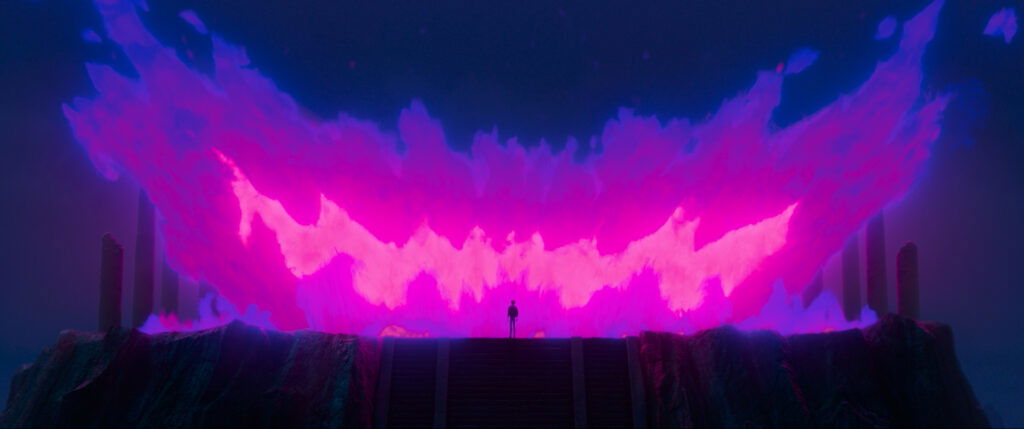
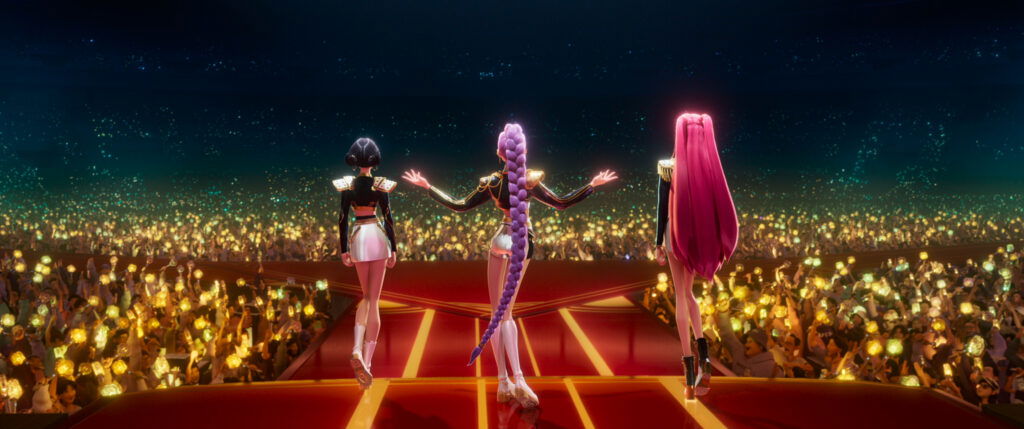
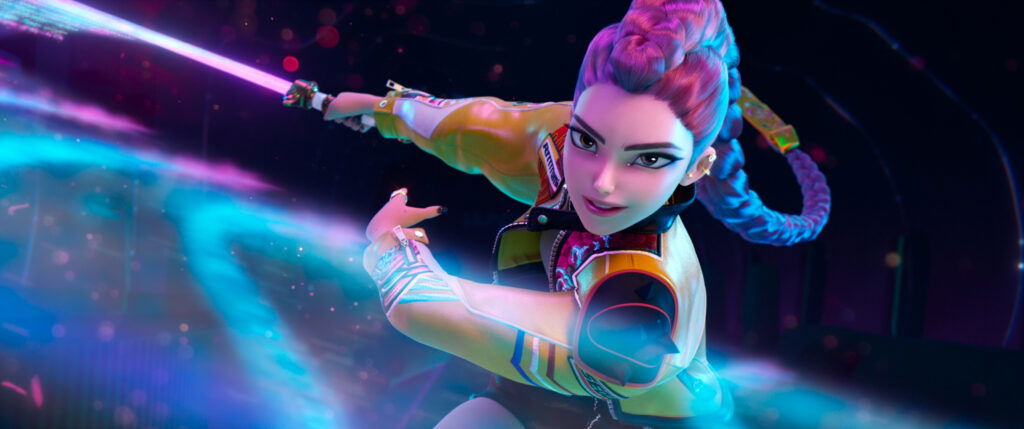
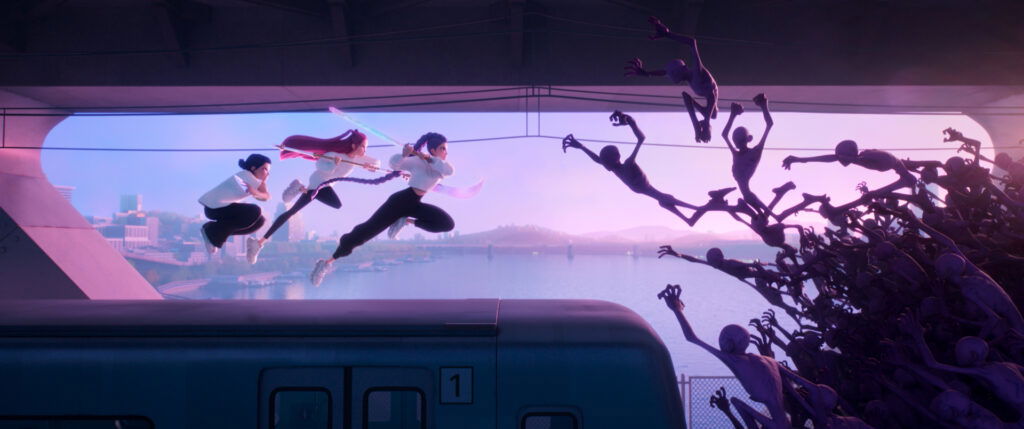
The more important part was Maggie [Kang] and Chris [Appelhans], the two directors, had a very particular tone across the board. The colors, the way the animation looks. I love these conversations, and that’s one of the reasons why I love working on animation. You get to have these conversations about tone. The sound person becomes a big part of the storytelling process. So there’s a cultural thing going on in that K-pop culture. This goes down to the sounds, to the colors, where it has to be cute, warm, and fuzzy. But at the same time, they’re demon hunters. They have to be badass. So, trying to find the balance of giving them power without being aggressive was a concern.
They wanted the swords to be powerful and magical, but in rhythm and pitch to the various chords they hit. Those swords were made from tuning forks, which is to me, is still a musical genesis. It sounds like a sword, and we can manipulate it a little bit to make it sound powerful and resonant without getting actual sword sounds that are too aggressive.
FANDOMWIRE: The sound design for both Derpy and Susan, who do not have a ton of screen time, is so effective. What was the process of creating those two characters? They’re the fan favorites, honestly.
Michael Babcock: Well, Derpy is actually one of those big challenges where you’re dealing with tone. You want to make something big, but he’s magical and powerful, and also kind of cute and fluffy at the same time. He has really heavy feet. Most of the time, he’s actually walking to the music.
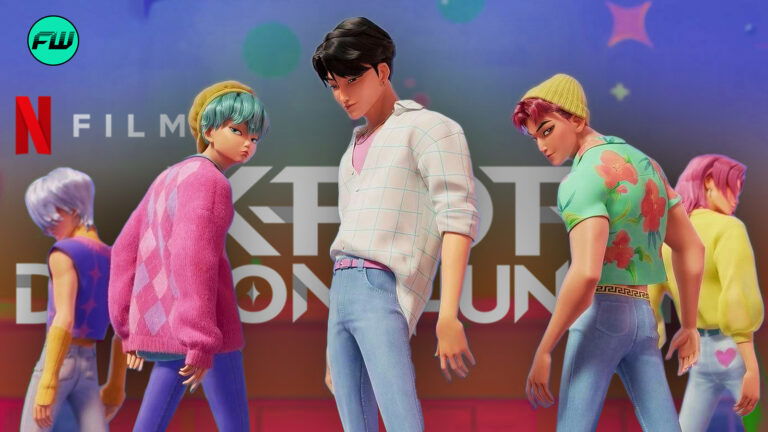
KPop Demon Hunters Review: Anime-Inspired Action Musical is a Candy-Coated Concerto of Cool Factor
The feet sounds were made from pillow hits. Just kind of like process pillow hits. Then the vocal of getting a creature to emote is one of the harder things in general. There’s a bit of cat sounds, but most of the “emote” is combined with my voice. Disguising my voice and processing it.
FANDOMWIRE: KPop is incredible, and there’s a reason why people are so obsessed with them. It’s because the thing works on so many levels. Especially after seeing it in a theater after the initial Netflix drop, it was so clear how much care you guys put into every bit of minutia.
Michael Babcock: Thank you. That’s across the board, even for me and the sound crew working. When that last reel came in and all the colors of the big concert and the Saja Boys, and that the big climax? We were like, “Whoa, this is epic.”
FANDOMWIRE: Obviously, Nuremberg is painting in a completely different tone and very serious tone at that. You had previously worked on courtroom dramas, most notably The Trial of the Chicago Seven. When you approached Nuremberg, what were some of the things you were hoping to do that could differentiate the soundscape?
Michael Babcock: You know what’s interesting? And this is also part of James’ process. There’s certainly a lot of courtroom in it, but it’s also historical. He just said, “Make sure it is accurate,” so all the vehicles are accurate. Even the stenograph machine. I bought one of those stenograph machines that you see in the courtroom.
The bigger issue was that I wanted to talk to him about the performances. Because the story is true, there were real relationships that were forged between Dr. Kelly and a couple of the Nazis. It certainly gets to literally the darkest of the dark. But also with the tone changes, James successfully makes it not as dark. It can’t feel like the audience is being manipulated, either with the sound or the music. A lot of things in the movie were actually playing with tone.
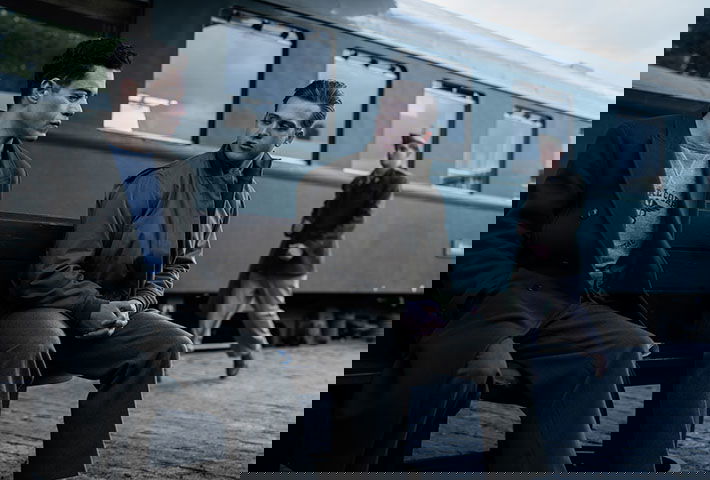
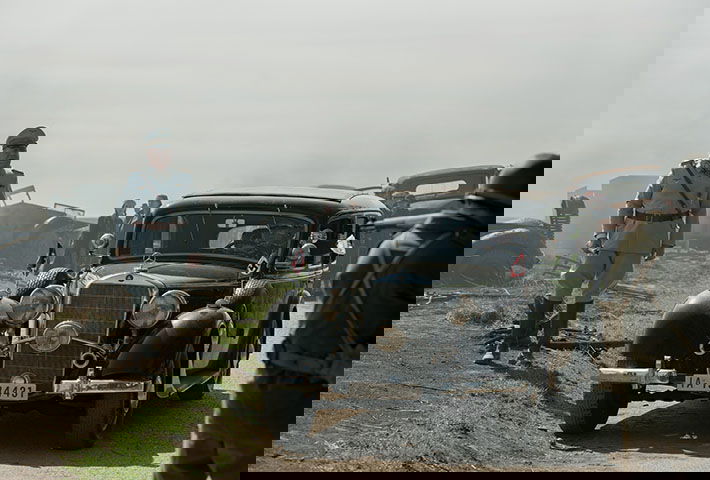
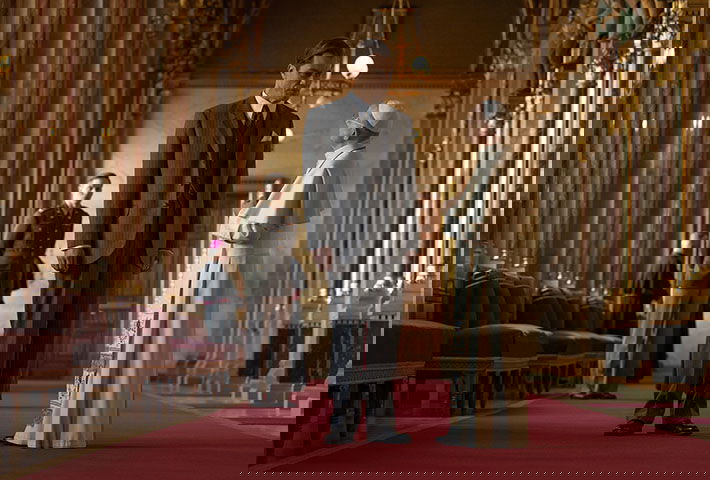
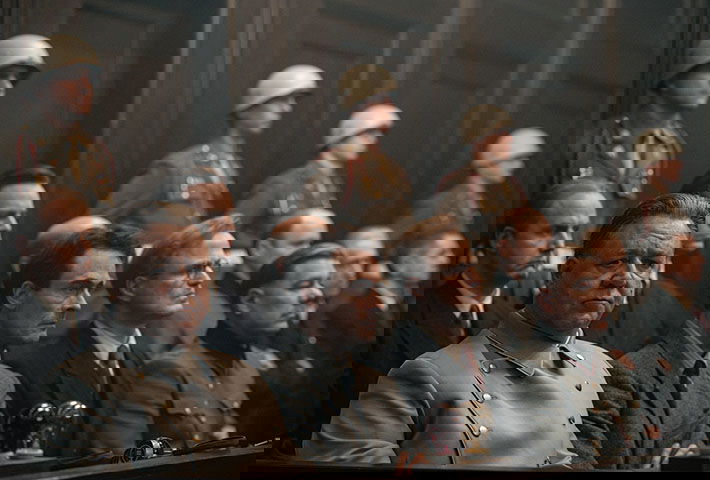
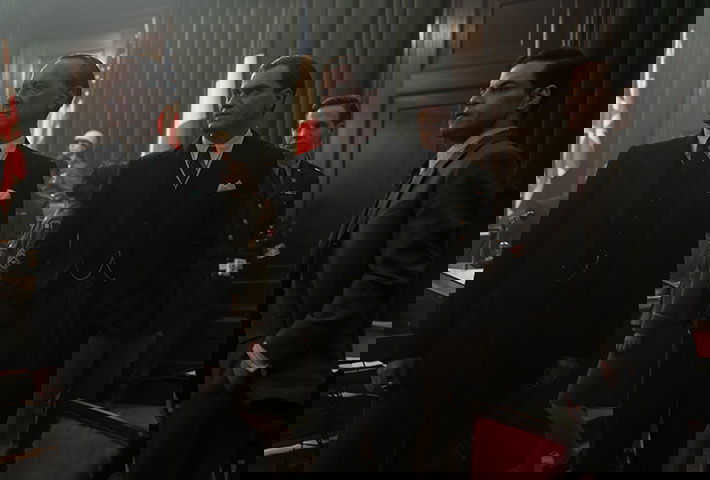
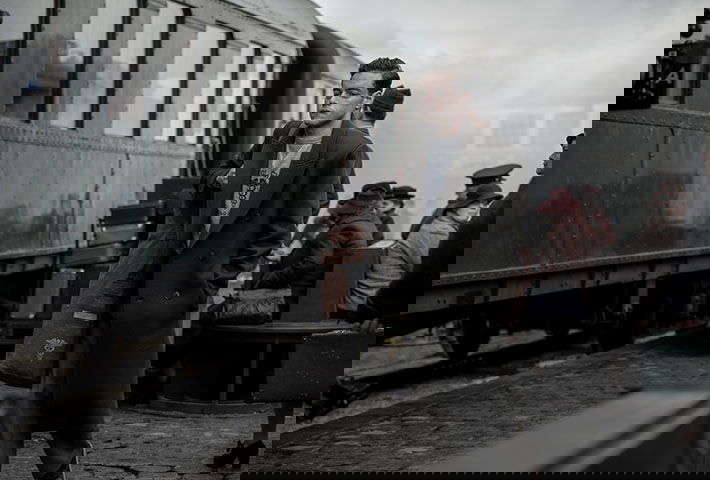
There’s some serious, immersive sound design. We were using a lot of reverbs in the courtroom. James wanted the courtroom to breathe because it actually was a bombed-out husk of a building. One of my favorite scenes in the movie is when Judge Jackson meets Kelly out in the stadium. There’s a vibe to that wind. It encapsulates them and doesn’t distract. There’s actually a lot of that going on throughout the movie without distracting their performances.
Brian Tyler, the composer, had the same thing. The scene at the train station where Kelly’s about to leave, and how Triest admits that he’s a Jew? The first time I saw that scene, I had a big concern because there’s a point where the music comes in while he’s telling his story. As well as that scene is acted, if you feel the music come in, suddenly we’re in melodramatic territory. And that’s bad. I think we managed to achieve this floating thing where the elements and all the background sound are going away, and are gradually being replaced by different layers of the score. That, to me, is what making sound for movies is all about.
FANDOMWIRE: You have a lot of actors using accents. I’ve always wondered how you approach that as a sound designer.
Michael Babcock: You just hit on something that was the biggest challenge of the entire movie. The production sound team did an absolutely amazing job capturing all these performances. It’s the most time I’ve ever spent pre-dubbing dialogue, because they did such an amazing job.
At the same time, they shot this movie in 2024, and it’s supposed to be a historical drama. James really wanted each location to have a character to it. There’s not a whole lot of ADR, which is surprising given all the German-speaking accents that were going on. Actually, Ulrika [Akander], my dialogue supervisor, also spoke German, which was actually very helpful. If I’m pushing a syllable or something, she makes sure that I am not messing up a word.
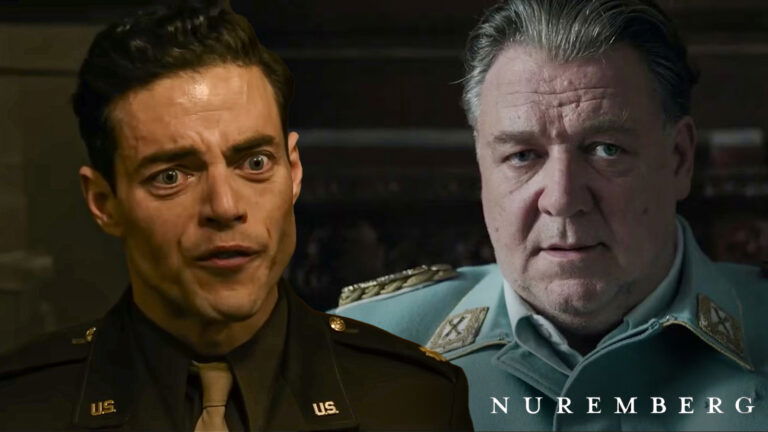
Nuremberg Review — WWII Drama Tries to Transcend Awards Bait Cliches to Mixed Results
Some of the hardest things I’ve ever mixed were the two of them in the cell. He wanted that to be very much at times, especially when they’re really going at each other. They are these thick German walls in the script, but that’s not what the set was. But there’s no ADR. Some technology, which has recently become available, helped. I should add, when I say, “Technology,” not AI.
Just about everything in that scene, there’s no ADR, and that was not how the dialog track sounded when we got it through, no fault of the production sound people. It had to do with the set. It was definitely a technical achievement, but it’s some of the most challenging stuff in my career.
FANDOMWIRE: What do you have coming up next? Because I do know you have one really big project coming to Netflix early next year. What are some of the other things that you have on the horizon?
Michael Babcock: Well, I have a couple of things that I actually can’t talk about. I do know that I’m going to be mixing the next Hunger Games movie. But I think you’re referring to People We Meet on Vacation.
I’m going to say this as a fan of the movie. I started the mix on People We Meet on Vacation the day after I delivered the final elements of KPop. It’s a very sweet movie. I really enjoyed it. It’s not the typical rom-com. You know Tom Blythe is great from the last Hunger Games movie. What’s actually interesting is that he can do this too. Emily Bader, the person who plays Poppy, is a movie star. This is just the sound guy talking. But not any actress that can do comedy and drama like Sandra Bullock. She’s got that. I think it’s a very sweet movie.
KPop Demon Hunters is currently streaming on Netflix. Nuremberg is currently in theaters.
To hear the full 30-minute interview with Michael Babcock, please check out the FandomWire Interviews page on YouTube. This interview has been edited for conciseness and clarity.